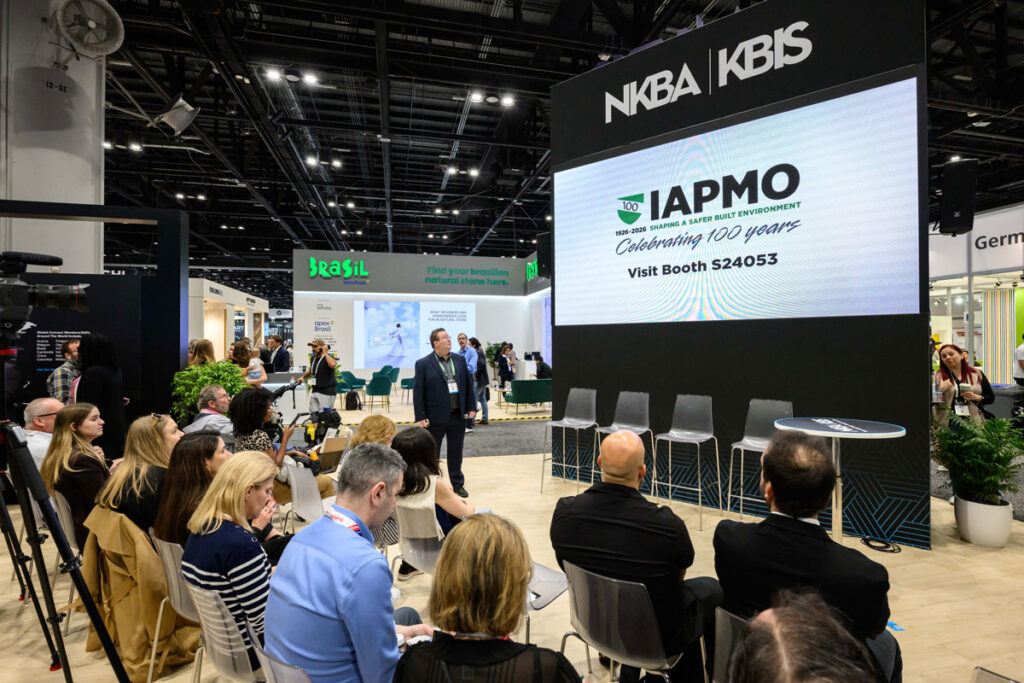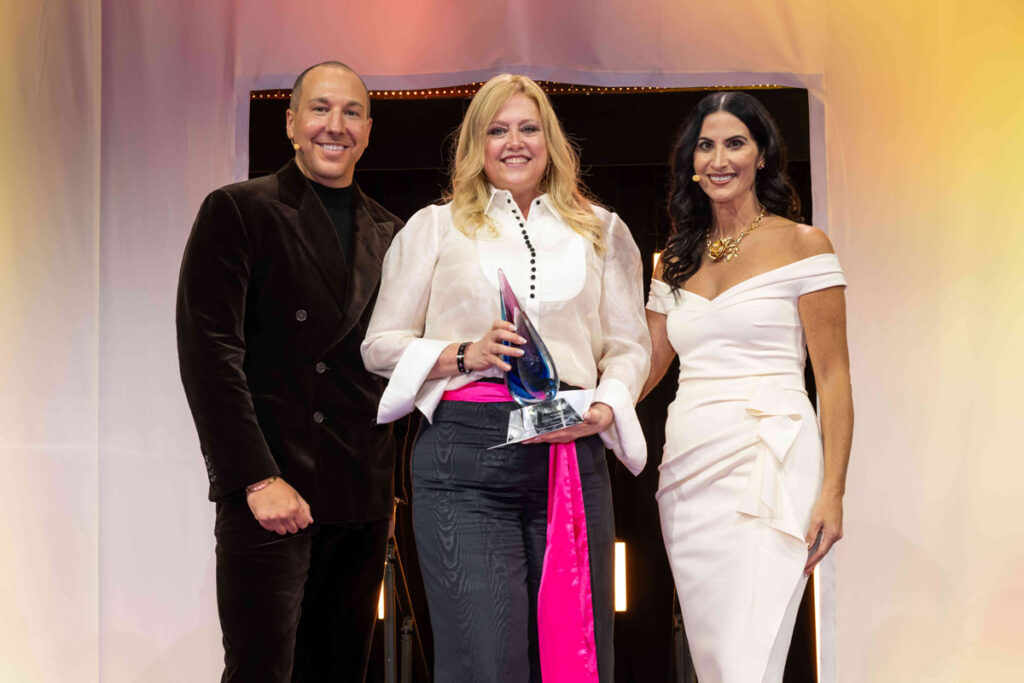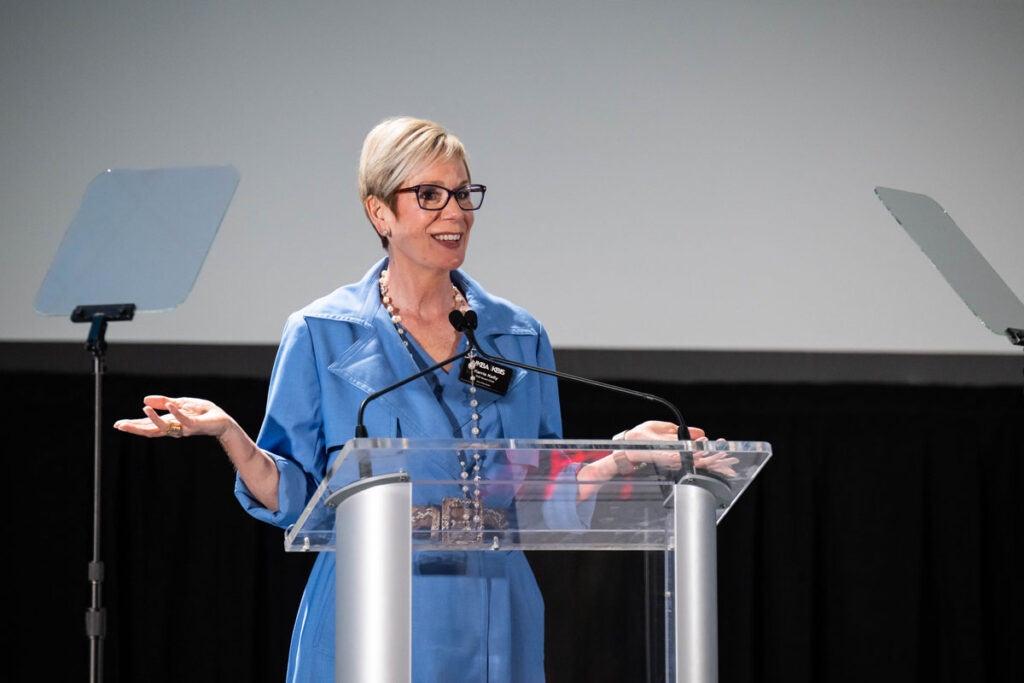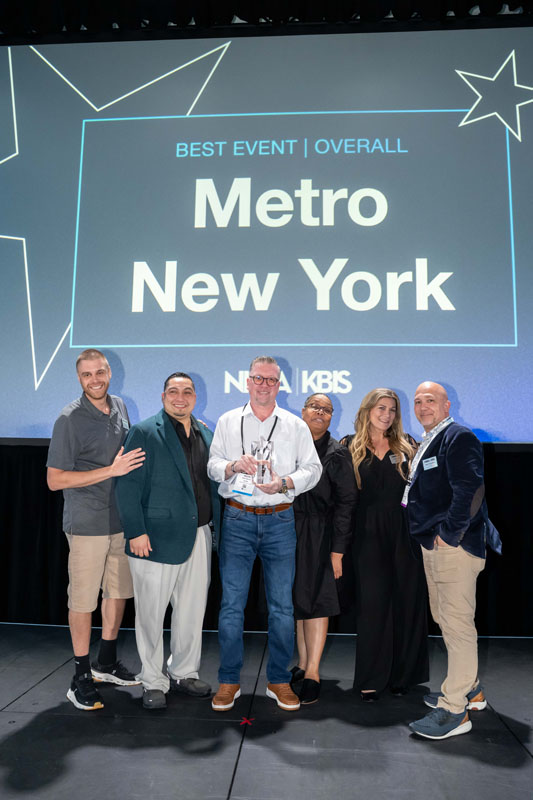






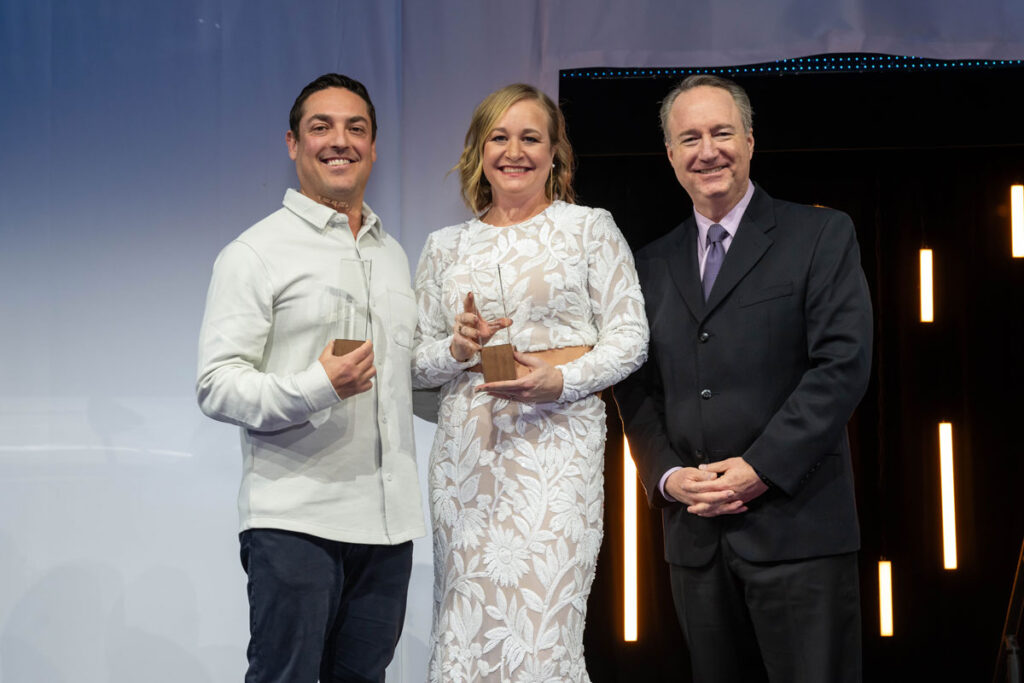
Daryl Friedman, Global President and CEO of the home technology integrators association, presented the inaugural CEDIA Smart Home Tech Award.
By NKBA Staff
Smart home technology and integration is growing exponentially in residential design and construction and is becoming a more integral part of the kitchen and bath arena. Last year, NKBA was proud to partner with CEDIA, the association for smart home pros, on exclusive research examining the current state of smart home tech integration in kitchens and baths. One result of this collaboration is a design award that recognizes two professionals — a designer and an integrator.
The CEDIA Smart Home Tech Award made its debut at the Design & Industry Awards on Feb. 16, just before KBIS 2026 began its three-day run in Orlando. Daryl Friedman, Global President and CEO of CEDIA, presented the honor and a $5,000 prize to designer Jen Stockwell from Stockwell Homes in Edina, Minn., and integrator Alex Lelchuk from Lelch in Minnetonka, Minn.
“Our two organizations have forged a greater collaboration this past year, in conducting our joint research, and I know we will continue to build on this partnership for the benefit of our memberships,” Friedman said in presenting the award. “I thank Bill Darcy and the entire NKBA team for this important alliance.”
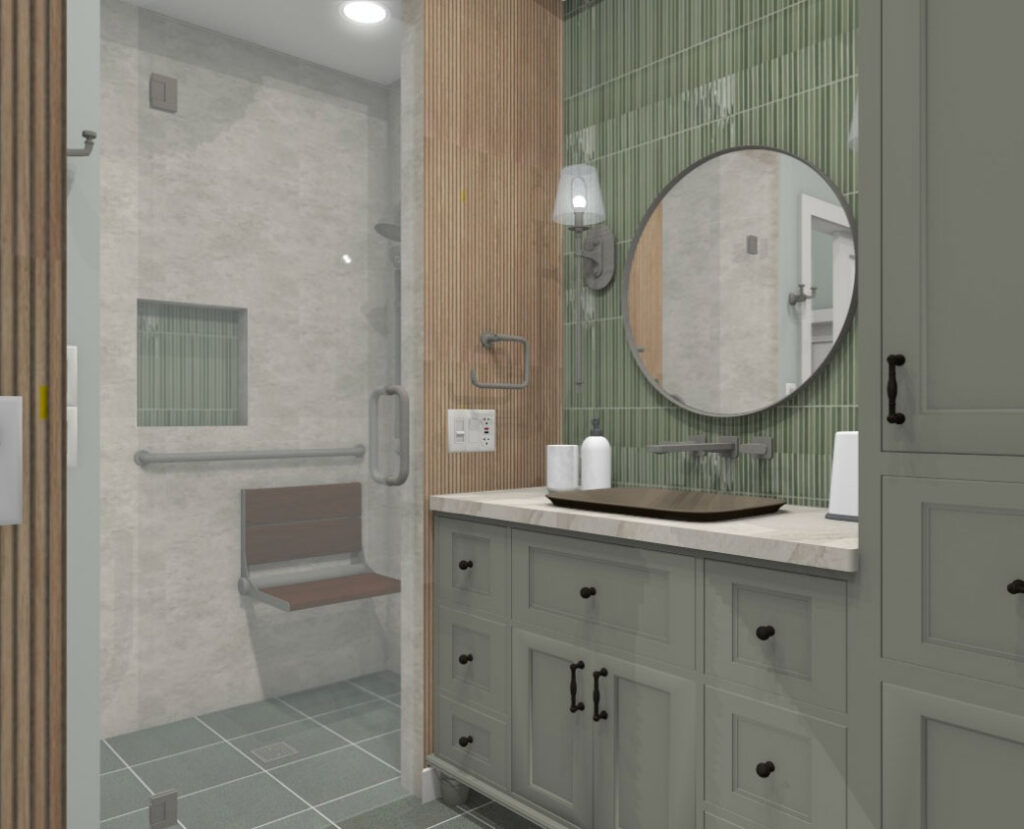
The winning project created an open-concept space in a home that was “full of promise but constrained by a fragmented and awkward layout,” according to Stockwell.
“Originally, the space felt chopped up,” she explained. “An 18-foot fireplace divided the kitchen from the living room, westward views were hidden in a small office, and prior additions created a maze-like floor plan with misaligned windows and awkward circulation. The home lacked light, flow, and warmth, and the kitchen, though central, was isolated and inefficient.”
She said her goals were to:
- Reimagine the home’s core living spaces to bring openness, natural light, and seamless flow.
- Relocate the kitchen to serve as a functional and aesthetic centerpiece.
- Create distinct but interconnected zones for cooking, dining, entertaining, and daily living.
- Integrate sustainable materials and practices without compromising beauty or function.
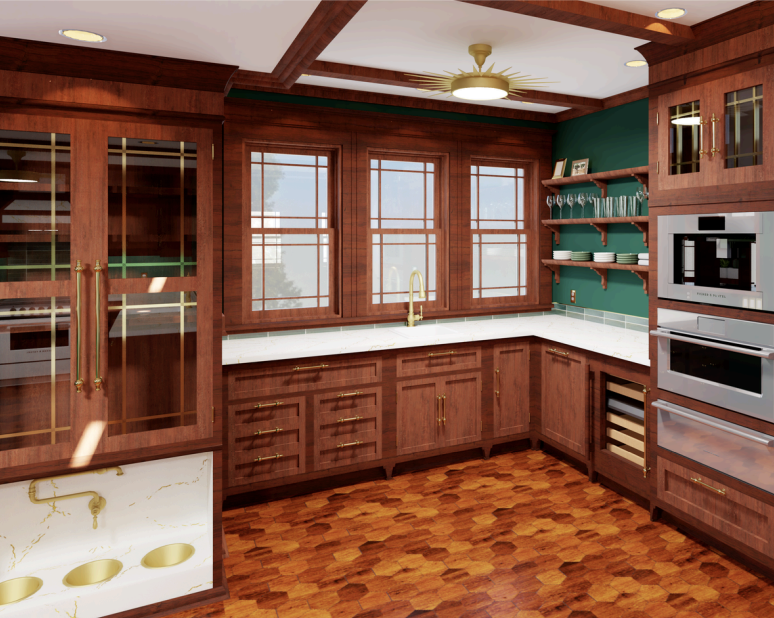
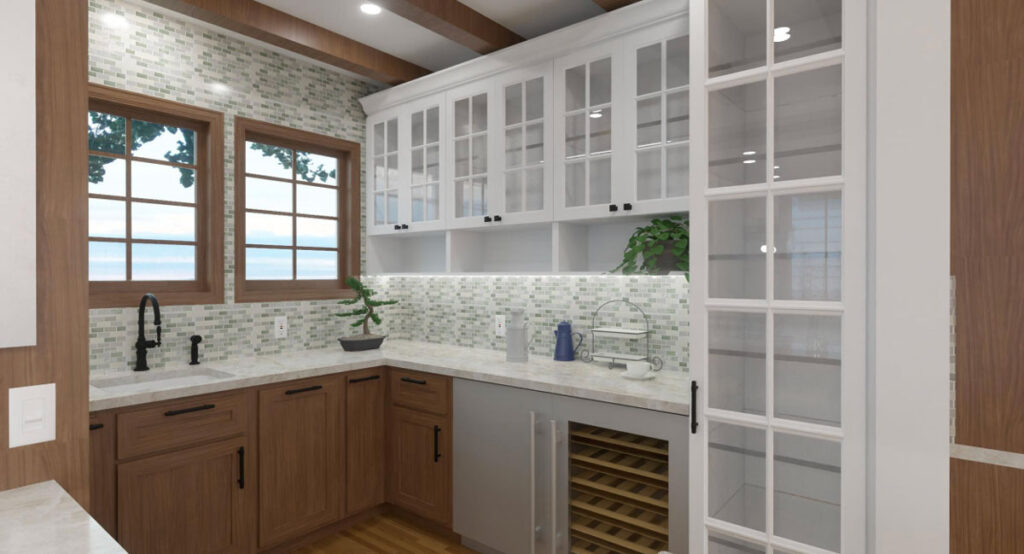
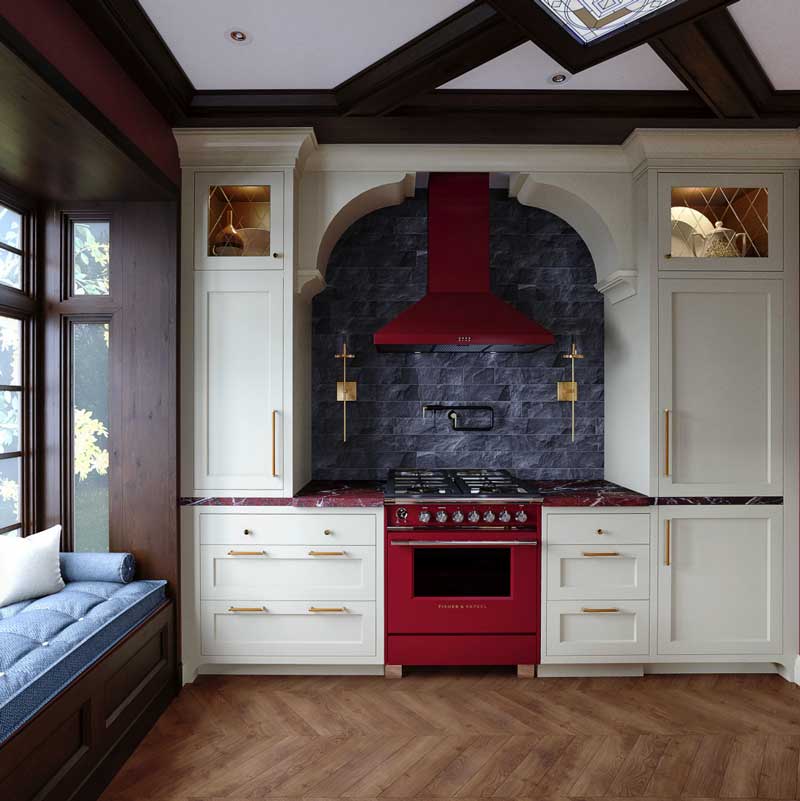
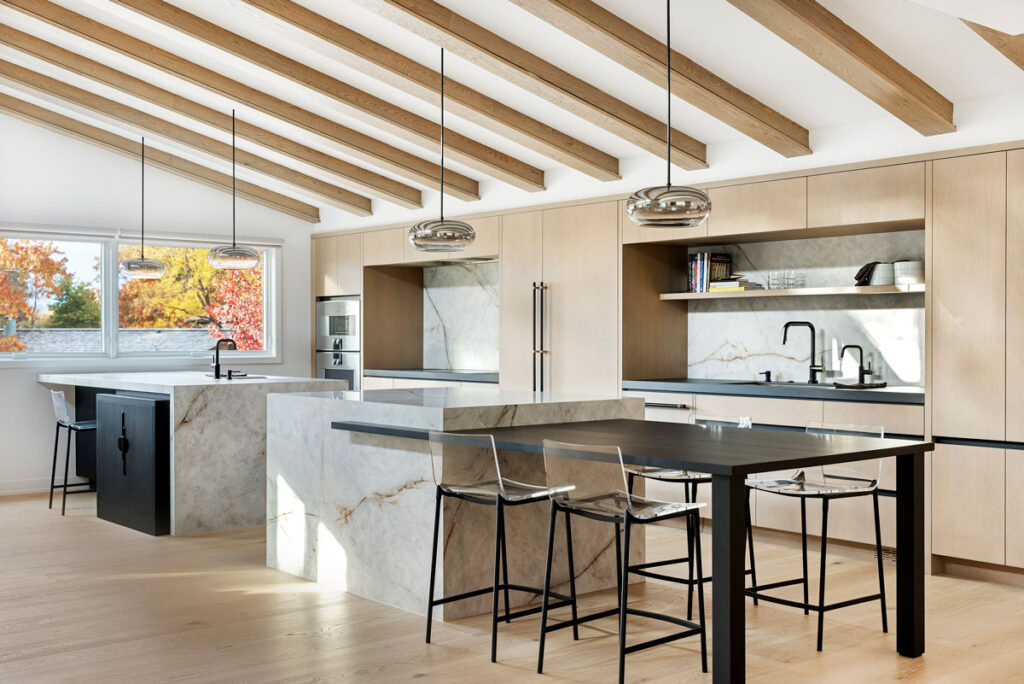
Stockwell relocated the kitchen to the front of the home, opening it to sweeping westward views and connecting it to the living room. She also vaulted ceilings that had been as low as seven feet to feel spacious and architectural, with distinct beams spanning the space.
Lelchuk said his biggest challenge in designing the technology to stay consistent with the interior designer’s plan was the kitchen’s unique circumstance in terms of lighting. “It’s a hot roof and has little to no room for recessed cans,” he said. “Recessing was important because we wanted to create a quiet ceiling effect, without glare from the lights. One way to accomplish this is to use recessed lights, with deflection and/or a darker color trim, so the reflection isn’t as loud from the light. Since recessed wasn’t an option, we worked with Jen to come up with a linear solution that would reflect back onto the ceiling, essentially having the ceiling become the ‘light source.’ The light itself is hidden, so you can’t see where the light is coming from, causing the ceiling to be quiet, but still providing beautiful light.”
Besides the appliances, smart-home tech features included layered lighting, with more than 250 feet of concealed tape lighting integrated into the white oak-wrapped beams, transforming the ceiling into a glowing canopy. Adding to the comfort and beauty, a NetZero water-vapor fireplace provides ambiance without emissions or pollutants. There are motorized Lutron shades throughout the space, allowing for seamless natural light control.
Lelchuk added that the team installed custom speakers by James Loudspeaker to blend in with the architecture. “We also have beautiful glass keypads for lighting control from Lutron with custom engravings for each area,” he explained. “There’s audio throughout the home, as well on the outdoor patio, all individually zoned so each zone can play on its own or be grouped together. Finally, the TV is flat against the wall and looks like art when it’s off.”
Stockwell also implemented sustainable strategies throughout, by salvaging materials through full deconstruction, sourcing low-carbon materials, reducing construction waste and selecting Neolith sintered stone countertops with zero-waste, carbon-neutral production.
“This home is reborn, filled with light, cohesive, sustainable, and dynamic,” Stockwell noted. “Every design decision — from circulation and lighting to sculptural elements and material choices — transformed the heart of the home into a space that is functional, beautiful, and environmentally conscious.”
This year, NKBA awarded $140,000 in cash prizes to winners of the professional Design Competition in seven categories: Small, Large and Specialty Kitchen; Primary, Secondary and Powder Room Bath, and Smart Home Technology in partnership with CEDIA. The NKBA will begin accepting entries for the professional Design Competition in May, with winners honored at KBIS 2027 in Las Vegas, Feb. 2 to 4.