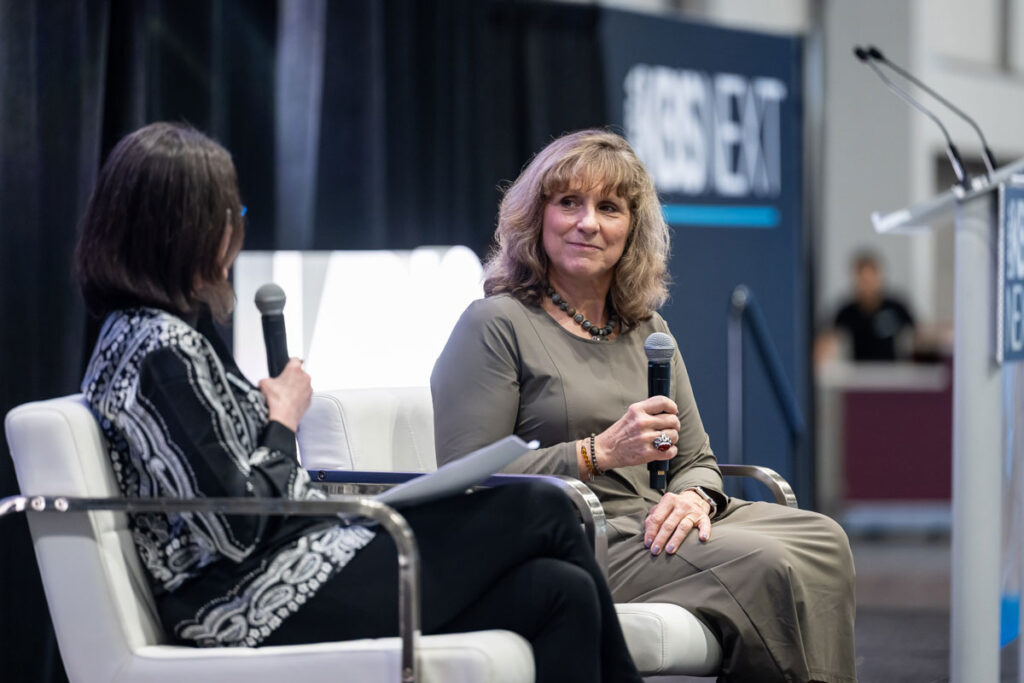






Amber Clore of A. Clore Interiors offered savvy solutions to help people live comfortably and with dignity in their own homes.
By Dianne M. Pogoda
People are living longer than — and differently from — their grandparents’ generation, and that’s reshaping design. Aging in Place has implied limitations, and designers aim to flip that idea to mean freedom in all stages of life.
In “Freedom By Design: Reframing Aging in Place for Today’s Kitchen and Bath,” Amber Clore, owner of A. Clore Interiors in Sanford, Fla., presented essential strategies for design and removing any stigma associated with aging. Kitchens and baths shape independence, she said, because they are the highest-impact design zones, where daily routines take place, and where safety and dignity begin.
“When kitchen and bath spaces work well, we feel independent,” said Clore. “The space allows the freedom to move about.”
The generational landscape is shifting, with Baby Boomers and their elders the fastest-growing population segment. This group is expected to have the largest near-term impact in 2026, and by 2050, the population over age 50 will have tripled from what it is today.
“These clients want homes that grow with them,” said Clore. “When they see it as ‘smart planning for the future,’ it’s much more appealing to think about than ‘designing for their decline.’ We’re looking for environments that evolve with all stages of life. It’s really about living with freedom.”
An accessible space is the goal, she added, making it easy to move around and to reach things. “You also have to account for the caregiver. It has to be easy for caregivers to maneuver in the space.”
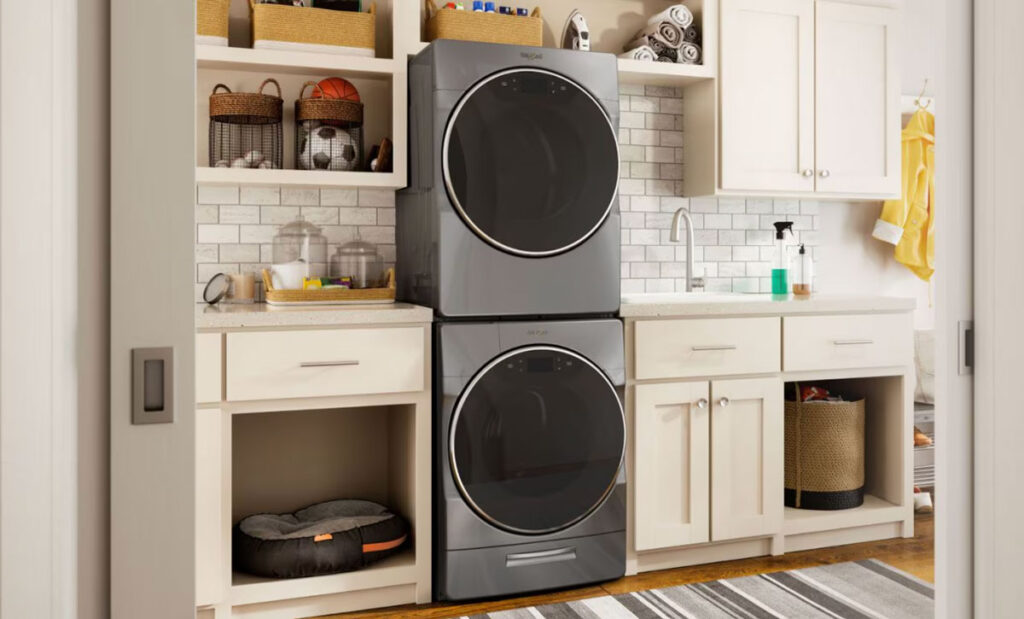
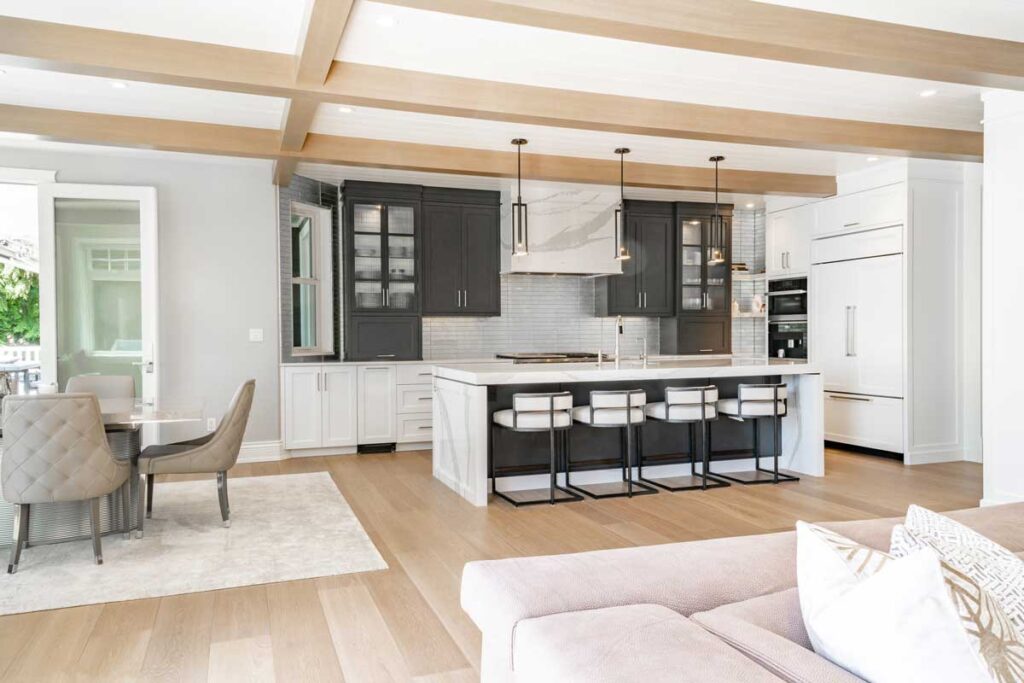
The design paradigm has shifted from reactive to proactive, and to creating spaces that seem less clinical while still achieving the goals of safety and convenience. Independence is not created by gadgets, but rather by circulation. Clearance matters, as do zones where more than one person can operate, accessible storage that’s adaptable for all ages and abilities, multiple work heights, reachability and ergonomics. If space permits, a scullery is a great secondary space where the homeowner can hide appliances to improve flow in the main area.
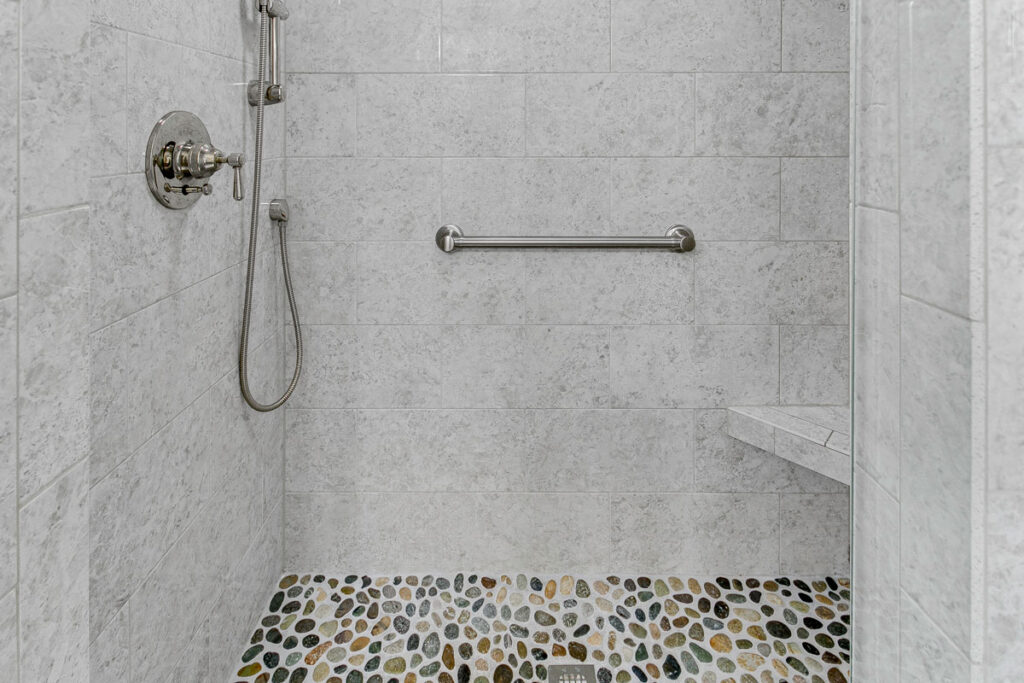
There are significant safety considerations in the bathroom, the pair concurred, like non-slip surfaces, softer edges and corners, integrated seating and a barrier-free entry in a shower.
Flexibility is the new luxury, and flexibility comes with preparation, said Clore. For instance, prepare for future grab bars with in-wall blocking and reinforced walls, modular components, and fixtures that can be upgraded. The homeowner might not need it today, but many homes eventually are used for multi-generational living or are passed down to future generations. You never know who’s going to use them. Timeless design techniques feature elements that can be adapted.”
To make a home safe and prevent accidents as much as possible, the design focus should be on the space’s core function, with design details that bring the personality. Lighting should be thoughtfully layered throughout the space. Technology supports lighting that creates a safe environment, as well as design and construction techniques that can be virtually invisible.
“The best smart-home tech reduces friction; it has to be easy for multiple people to use, and the right fit for the people using the space,” Clore stated. “It enhances confidence and supports independence.”
These innovations could include touchless fixtures, voice control, minimal hardware, seamless supports, the safety of induction technology, toe-kick lighting, motion-sensor-activated lighting, and more. When thinking about the now and the future, it’s important to remember that sustainable materials will help the space stand the test of time.
“Designing with intention means considering the clients’ needs and wants,” Clore concluded. “Every client is different and has a unique design language. But what they all value most is their independence and dignity.”