






From smarter kitchens to spa-inspired baths, 2025 marked a pivotal year for the rooms that shape daily life.
As revealed across NKBA | KBIS research and industry reporting, kitchens and bathrooms continued their evolution into highly personalized, wellness-driven, and technology-enabled spaces—setting the stage for what’s next at KBIS 2026, February 17–19 in Orlando.
Kitchens: Bigger, Smarter, More Personal
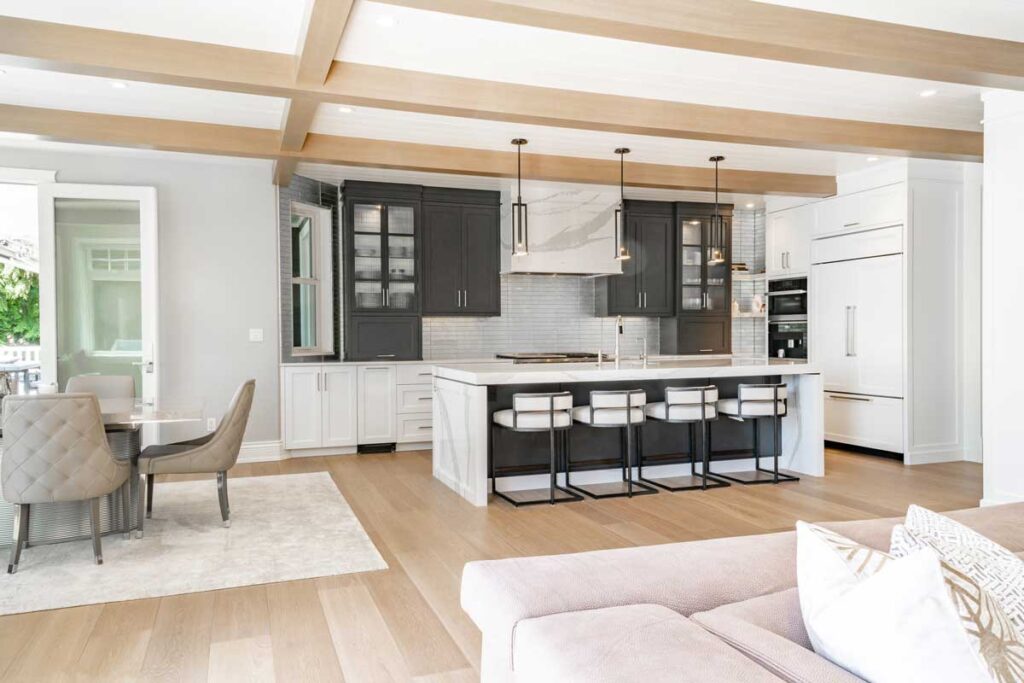
The kitchen’s footprint—and influence—kept growing in 2025. Even as overall home sizes trend smaller, designers reported continued expansion of the kitchen, reinforcing its role as the home’s social, functional, and aesthetic hub. These findings align closely with insights from the NKBA | KBIS 2025 Kitchen Trends Report and the association’s Design Forecast, both of which point to open layouts and multifunctional planning as long-term shifts rather than short-term trends.
Open kitchens strengthened the connection between kitchen, living, and outdoor spaces, replacing traditional dining rooms with multifunctional islands, banquettes, and integrated storage—an evolution also highlighted in Business of Home’s coverage of post-pandemic space planning and lifestyle-driven design.
Minimalism matured. Flat-panel cabinetry, panel-ready appliances, and slab backsplashes delivered a clean, cohesive look—without sacrificing warmth. According to the NKBA Design Forecast, natural materials led the way: wood-grain cabinetry overtook painted finishes, with white oak emerging as the dominant species. Quartzite also gained momentum alongside quartz for countertops and backsplashes, a shift echoed in Business of Home reporting on material preferences moving toward authenticity and performance.
Color stayed calm—with strategic moments of impact. Neutrals remained the foundation, joined by soft greens and blues. When designers introduced bolder expressions, it landed intentionally—on islands, backsplashes, wallpaper, and decorative accents rather than across entire rooms. This restrained approach reflects what Business of Home has described as “confidence through editing,” where homeowners prioritize longevity over trend saturation.
Storage became a lifestyle solution. Floor-to-ceiling cabinetry, walk-in and butler pantries, multi-zone refrigeration, and islands packed with drawers addressed how homeowners actually live. The NKBA Kitchen Report notes continued growth in dedicated beverage stations, eat-in kitchens, pet-feeding zones, and adjacent mudrooms or flex offices—reinforcing the kitchen’s role as a personalized command center.
Kitchen IQ increased. Wi-Fi–enabled appliances, app-controlled lighting, embedded charging, steam cooking, advanced ventilation, and smarter refrigeration reflected growing demand for intuitive upgrades that support health, efficiency, and convenience. Both NKBA research and Business of Home analysis point to a clear expectation: technology must feel seamless, not showy.
Bathrooms: From Utility to Sanctuary
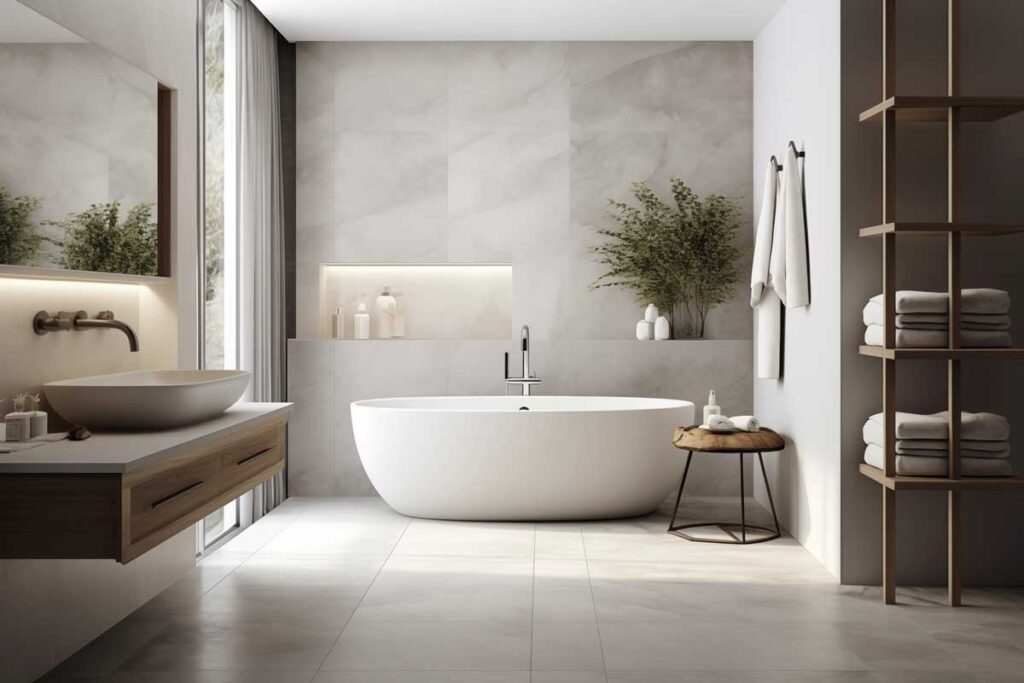
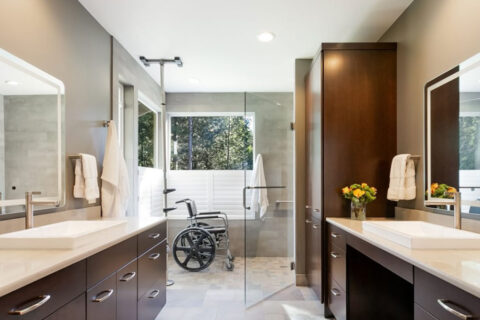
Wellness defined bath design in 2025. Primary bathrooms expanded to accommodate spa-like experiences, universal design, and smarter storage. According to the NKBA 2025 Bathroom Trends Report, larger showers continued to outpace tubs for many homeowners, opening the door to steam, aromatherapy, chromotherapy, integrated seating, and shelving.
Timeless, organic aesthetics prevailed. Light neutrals dominated, paired with sage and olive greens. Wood-faced vanities surpassed painted finishes, reinforcing biophilic design principles highlighted across NKBA research. Large-format surfaces and minimal grout lines addressed homeowner demand for durability, ease of maintenance, and visual calm—an issue frequently explored in Business of Home’s reporting on specification decisions.
Matte and brushed finishes replaced high polish. Faucets and fittings leaned toward softer sheens that complement natural materials and hide wear—an intersection of beauty and practicality supported by NKBA trend data.
Lighting layered the experience. Natural light, task lighting, integrated mirror illumination, mood lighting in showers, and nighttime-specific lighting worked together to support daily routines and relaxation—the NKBA Design Forecast underscores lighting as one of the fastest-evolving categories in bath design.
Technology-enabled personalization. Intelligent showers, lighting systems, smart toilets, and wellness-focused features advanced rapidly, while custom vanity storage—with power, organizers, and device charging—reflected a shift toward bespoke daily rituals. Business of Home has similarly noted that technology adoption is accelerating most quickly where it directly enhances comfort and wellness.
Accessibility became elegant. Aging-in-place features such as curbless showers, benches, grab bars, and wider doorways moved firmly into the mainstream, designed to be as refined as they are functional—a key takeaway from both NKBA research and recent Business of Home industry analysis.
Designing for Every Generation
2025 also highlighted how generational needs shape design. NKBA research shows Gen X and Boomers leading remodeling activity and spending, prioritizing functionality, long-term value, and ease of living. Millennials continue to seek entertaining space and premium convenience, while Gen Z gravitates toward smart, connected homes. Across all age groups, Business of Home and NKBA reporting agree on one point: personalization—not resale alone—now drives decision-making.
Looking Ahead
The defining takeaway from 2025 is clear: kitchens and baths are no longer single-purpose rooms. They are intelligent, health-conscious environments tailored to individual lifestyles—spaces that connect, restore, and adapt.
These shifts will be front and center at KBIS 2026, where NKBA | KBIS, designers, manufacturers, and specifiers gather to explore what’s next.
Don’t Miss KBIS 2026, February 17–19 in Orlando — Register Now.