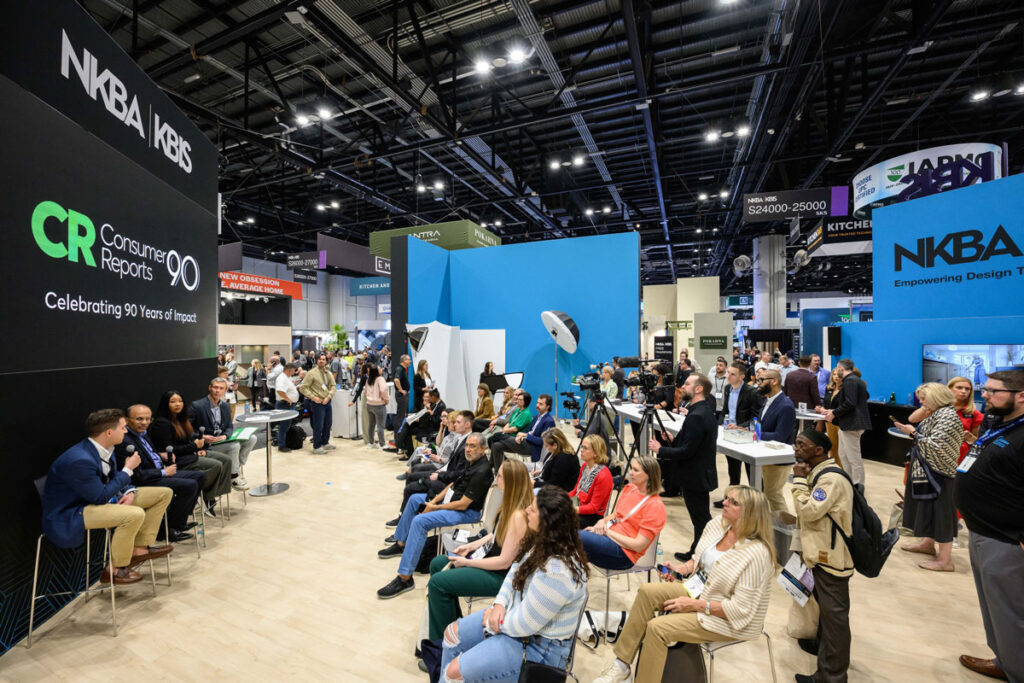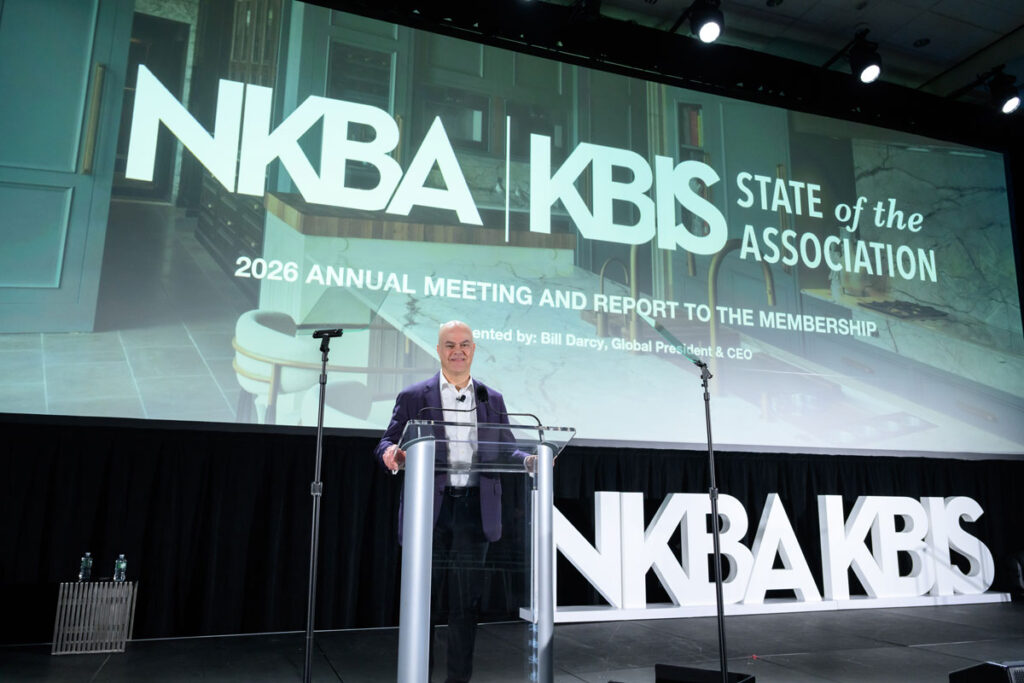






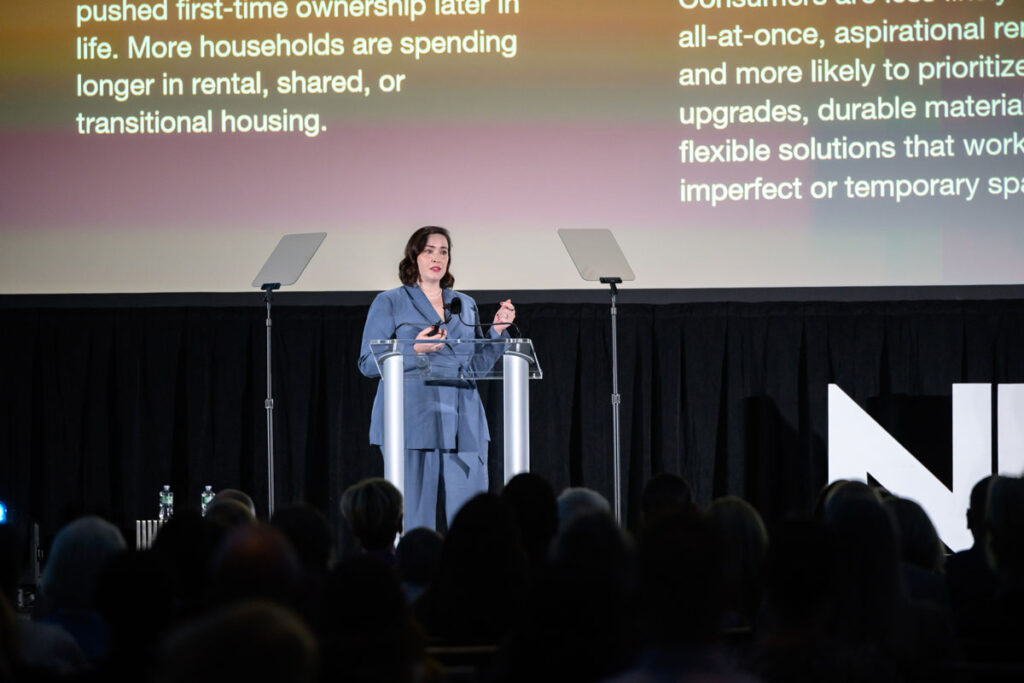
Trend forecaster Jaye Anna Mize of Future Snoops offered strategies for deciphering changing consumer behaviors and what it means for design.
By NKBA Staff
Consumer behavior, especially among younger generations, is changing dramatically as lifestyles adjust to new realities that prioritize experiences, durability and flexibility. And these changing priorities have big implications in the home, according to Jaye Anna Mize, who delivered the State of the Industry keynote presentation at KBIS 2026.
Mize, a highly respected creative strategist, trend forecaster, and prominent voice for future-forward design and innovation, is Vice President of Advisory + Partnerships at Future Snoops, a global trend forecasting agency that helps brands develop insight-driven strategies that future-proof their businesses.
She shared key five insights about how the home is changing and how behavior is shifting, what this means for consumers, and in turn, for designers.
- Beyond the Dream Home: The classic timeline — grow up, finish school, find a partner, buy a house, have kids — is out the window. Millennials and Gen Z don’t prioritize the same lifestyle as their parents. They have increasingly more debt, have watched housing volatility, climate change and labor instability unfold, and permanence doesn’t feel real. “These generations don’t care about marriage, formality, or staying put,” Mize said. “They want experiences. They don’t want white picket fences. So, when the timeline shifts, the question shifts with it. Instead of asking ‘What does my dream kitchen look like?’ — consumers increasingly ask, ‘How do I make this kitchen work better for the next five to seven years?’ That isn’t a stylistic change. It’s a structural recalibration.
Instead of chasing transformation, they’re prioritizing efficiency, adaptability, and everyday usability. And that’s where the definition of premium begins to change. Premium is no longer defined primarily by size or visual drama. Increasingly, it’s defined by how well a space performs over time.
“Consumers aren’t stepping away from improving their homes,” she said, “but the model of improvement is changing. Instead of asking how much more they can build, consumers are asking how well their existing space performs. They improve circulation rather than enlarge footprints. They refine storage logic rather than layer finishes. They invest in ease of use rather than visual scale.” - Preservation: “This next shift is more existential,” Mize said. “For decades, luxury in the home was defined by refinement. Delicate materials. Rare finishes. Surfaces chosen for how they looked, not how they lived. That logic worked when stability was assumed, but stability is no longer assumed.”
Consumers today live with visible economic, environmental and social volatility, which changes the emotional role of the home. The home is no longer just an expression of taste. It’s becoming a form of protection — from rising costs, environmental exposure, health concerns and general uncertainty about the future. This shifts the definition of premium from refined to reliable. The home is increasingly treated as infrastructure to protect — and kitchen and bath are where that shift is most visible. - Streamlined Shopping: The first two points addressed what consumers want from their homes. This shift is about how they decide. This is where AI comes in, as it reshapes discovery. It used to be that the journey began with exploration with a design professional. Now, savvy consumers often arrive having already researched layouts, compared products, and formed preliminary shortlists online— before a designer or showroom ever enters the picture. “What we’re seeing is a move from open-ended discovery toward guided decision-making,” she said. “Clients still want support. They want faster clarity, and confirmation that their choices will work. Reassurance that they’re avoiding costly mistakes. The question shifts from ‘What can we show them?’ to ‘How quickly can we help them decide with confidence?’”
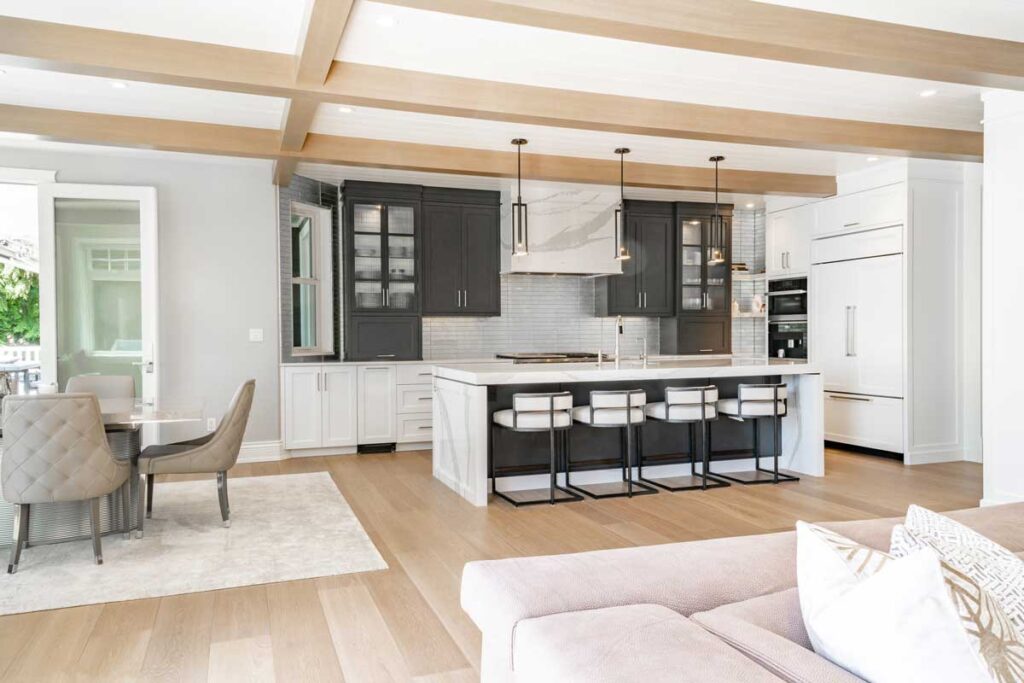
Designers feel this shift before anyone else, Mize observed. Clients come in with screenshots, saved boards and shortlists already formed. The questions have changed too — it’s no longer ‘what are my options?’ It’s ‘will this work, will this last, will this fit the budget?’ The conversation starts at validation, not discovery. - The Kitchen Community: Over the past few decades, the spatial hierarchy of the home has been quietly collapsing. Only about 14 percent of new homes now include a dedicated formal dining room — down dramatically from the mid-Nineties when they were standard. At the same time, roughly three-quarters of new homes now integrate the kitchen directly into the main living area. That structural change concentrates daily life into fewer shared spaces. And the kitchen absorbs the role of gathering space, work zone, hosting environment, and emotional anchor. It has evolved from a functional workspace into the primary social infrastructure of the home.
Younger generations place less value on formal hosting and more on frequent, informal gathering. Gen Z increasingly treats cooking as shared activity, social ritual, even content creation. The most meaningful moments in the home now happen around food — not in rooms designed for presentation. That’s why the kitchen has become the emotional center of the home — not because design trends say so, but because daily life demands it. - Lifestyle Living: This final shift is less about the house itself and more about the role design plays in how people live. “For decades, home decisions were mostly contained within the category. Now, design operates across a lifestyle ecosystem,” she explained. “A hotel stay influences how someone thinks about their bathroom. A clothing brand shapes their color palette at home. A café informs how they imagine their kitchen should feel.
The home stops being a separate design project. It becomes part of a continuous lifestyle expression. Lifestyle living reflects a shift from designing rooms to designing alignment.”
Mize concluded that homes have become part of broader lifestyle expression, and that design has shifted from decoration toward coherence. “The home is no longer aspirational theater. It is the infrastructure for modern life. The industry that designs for that reality — that builds for how people actually live, not how we once imagined they would — will lead what comes next.”