





Independent watchdog group Consumer Reports discussed appliance testing and its implications for the home at KBIS 2026.
By NKBA Staff
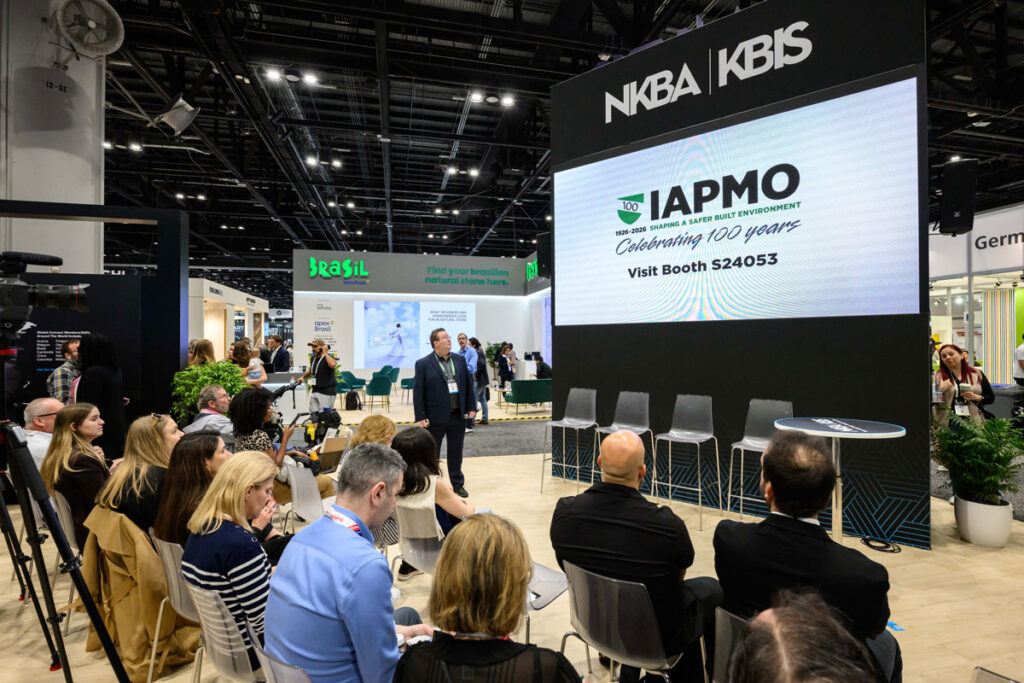
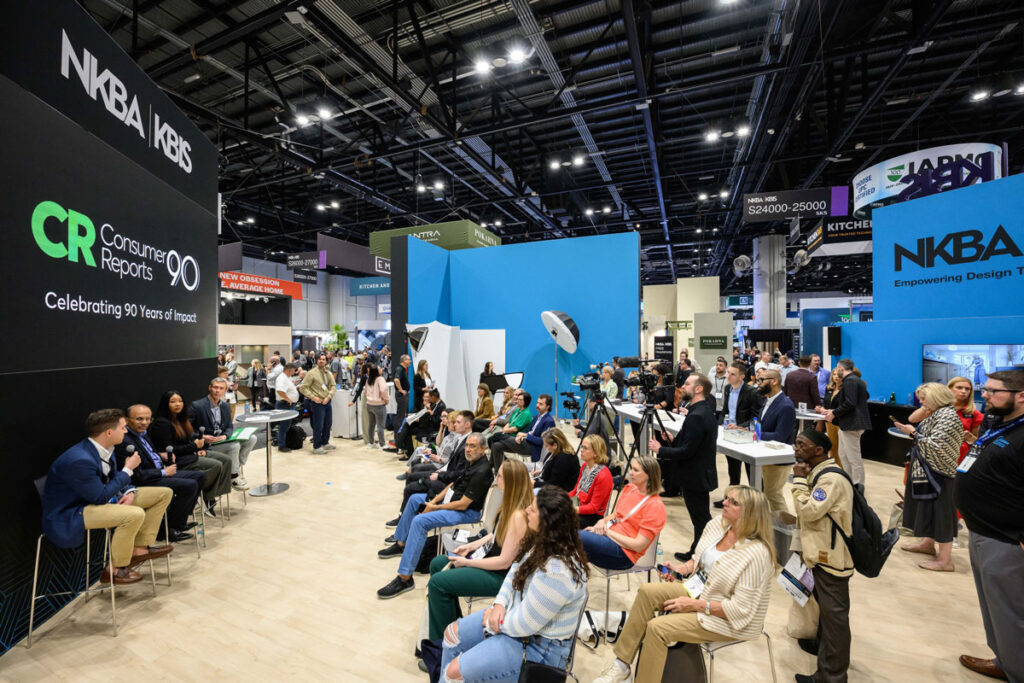
In a special presentation at NKBA’s booth during KBIS 2026, Consumer Reports executives gave attendees a behind-the-scenes glimpse of what goes into product testing — using refrigerators as a specific example — and what the group has learned in 90 years of looking out for consumers’ best interests when purchasing products.
Moderator Elliot Weiler, CR’s Director of Video, was joined by panelists Breann Chai, Kitchen Test Project Leader; Daniel Wroclawski, Senior Kitchen Content Creator; and Jacob George, Account Executive of Data Intelligence.
For nearly a century, CR’s engineers and scientists have tested kitchen and bath appliances and fixtures — among many other home products — to determine how they perform in real-life conditions and help people with their buying decisions. CR, which has 63 testing labs, also surveys its consumer members to determine how products perform over time in real-world conditions, which features are worth paying for, and which brands consistently deliver.
CR updates its testing to reflect innovations in technology, which helps separate the good from the great, Weiler pointed out.
“The fridge lab has three temperature and humidity control chambers, and we use probes throughout the units to test for these qualities in different areas of the refrigerator and freezer,” Chai said. “We also test for how noisy the units are.”
Wroclawski noted that CR analyzes member surveys and market data to get a sense of what consumers really want and what they truly use in appliances, for instance, the AI features now included in various appliances. The company adds testing for certain features as it sees broader demand for them increasing.
Chai added, “Features come and go. We’ve seen an uptick in Wi-Fi-enabled refrigerators, for instance, but less than 30 percent of consumers actually hook their fridges up to the Wi-Fi.”
Today’s refrigerators often have more tech features, and ice makers and water dispensers are the two components that fail most frequently. With more features comes more opportunity for breakdowns, George added, but satisfaction also rises when more features are included.
In-house testing is just one part of the scoring process, he explained. Consumer surveys asking about how they use the products are also a major contributor. These surveys reveal what parts break more often, satisfaction levels, and reliability over a few years. “The rating is a holistic measure,” he said. “We want to know how long it lasts and how satisfied the consumer is over time. Reliability is the number-one thing consumers want in large appliances.”
Wroclawski said CR communicates directly with manufacturers about the various innovations and test-lab findings. It has encouraged two-way conversations, and one major manufacturer even tried to replicate the CR lab testing. “It’s a win-win,” he said. “Rigorous testing makes for better products.”
CR testing also answers the question of whether it’s better to repair or replace an appliance, based on the appliance’s age, price, and repair cost.
Price is not always an indicator of the most reliable performance, the panel added, however, there is a relationship between reliability and brands, and this factor is ranked on the CR website. Wroclawski said these rankings have been pretty consistent over the past few years.
The old adage, “They don’t make ’em like they used to,” is true — but that’s a good thing, the panel noted. New products are indeed made better and use energy more efficiently. CR research and testing have demonstrated a 1.5 to 2 percent improvement every year, overall, across the industry.
“Products are getting better over time,” Chai said. “Technology is becoming more uniform in terms of temperature control and the other core functions of the product. Energy efficiency has improved over the years, playing a key role in how much it costs to own the appliance, too. We are constantly looking to improve our testing, evaluation of emerging technologies, and how they will help consumers.”