









A panel of expert designers and a representative from Urban Bonfire discussed the design of immersive, entertaining-driven outdoor spaces
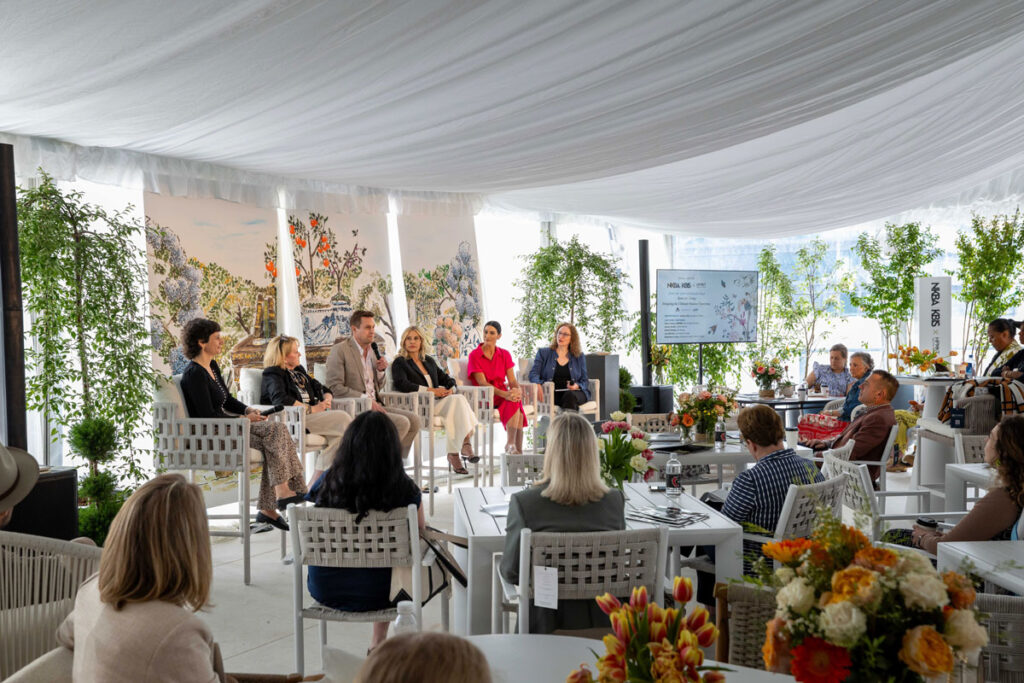
Panelists: Ashley Smith, Urban Bonfire; Lisa Mende, Lisa Mende Design; Daniel Keeley, DK Design; Stephanie Larsen, Stephanie Larsen Interior Design; Alena Capra, CMKBD, Alena Capra Designs
Moderator: Andrea Lillo, Designers Today
The business of designing for the outdoors has continued to boom since the 2020 lockdowns redefined the importance of home. And when it comes to real estate, the outdoor space can make or break a sale. Our five panelists gave us a lively, informative discussion about bringing the best of design outside:
- Creating cohesion
The outdoor space should be an extension of the interior and should fit with both the architectural style of the home and the existing natural environment.
Daniel Keeley talked about “genius of the place,” a well-known expression in the gardening world—referring to the importance of creating the impression that the entire space was conceived at the same time.
2. Working with nature
Whether you need to watch for hurricanes and saltwater content in the air, plan roofing that includes heating and cooling, implement measures to control mosquitos, or build in sufficient shade, the local conditions should be a linchpin during every aspect of design—in order to create a space that can be enjoyed all year long.
With an outdoor space, you want the same look as a beautiful interior room, but the materials you use will be different—such as resistant fabrics, deeper cushions, enduring finishes that won’t rust or mildew, and weighted drapery.
3. Framing the budget conversation
Careful and realistic budget planning is essential when designing for the outdoors, as is how the budget is presented. Telling a client their patio is included in their deposit solidifies the importance of seamless integration throughout the entire home.
If you get into a project and realize you need to make cuts, the panelists suggest at least putting the infrastructure in place so that the project can be finished later.
4. Evolving the craft
“The future of outdoor living is wellness,” says Stephanie Larsen, “It’s the new luxury.” The spa experience is now a daily ritual rather than reserved for an occasional experience.
Cold plunges, infrared saunas, crystals, and gongs are all part of Stephanie’s design palette—as well as carefully-chosen lighting that works with the body’s circadian rhythms.
5. Managing overwhelm
A client might fall in love with a particular outdoor feature, but are they prepared to properly maintain it? Does the outdoor space fit with the client’s lifestyle? What is the foot traffic in the area, and do you need anti-slip pavers? These are key questions to manage expectations and narrow the options when making design decisions.
“Create a priority list to make sure whatever is important to your client is included,” advises Ashley Smith.
Designers can get overwhelmed, too, and the panelists agreed that product knowledge is key. Go to trade shows and talk to the brand reps. “At Urban Bonfire, we want to educate designers,” assured Ashley.
For both clients and designers, simplicity and intention are key.
“The most successful outdoor spaces are those with fewer things and more open space so that when you come out, you can breathe,” assured Lisa, “And the outdoor area feels like a breath of fresh air.”