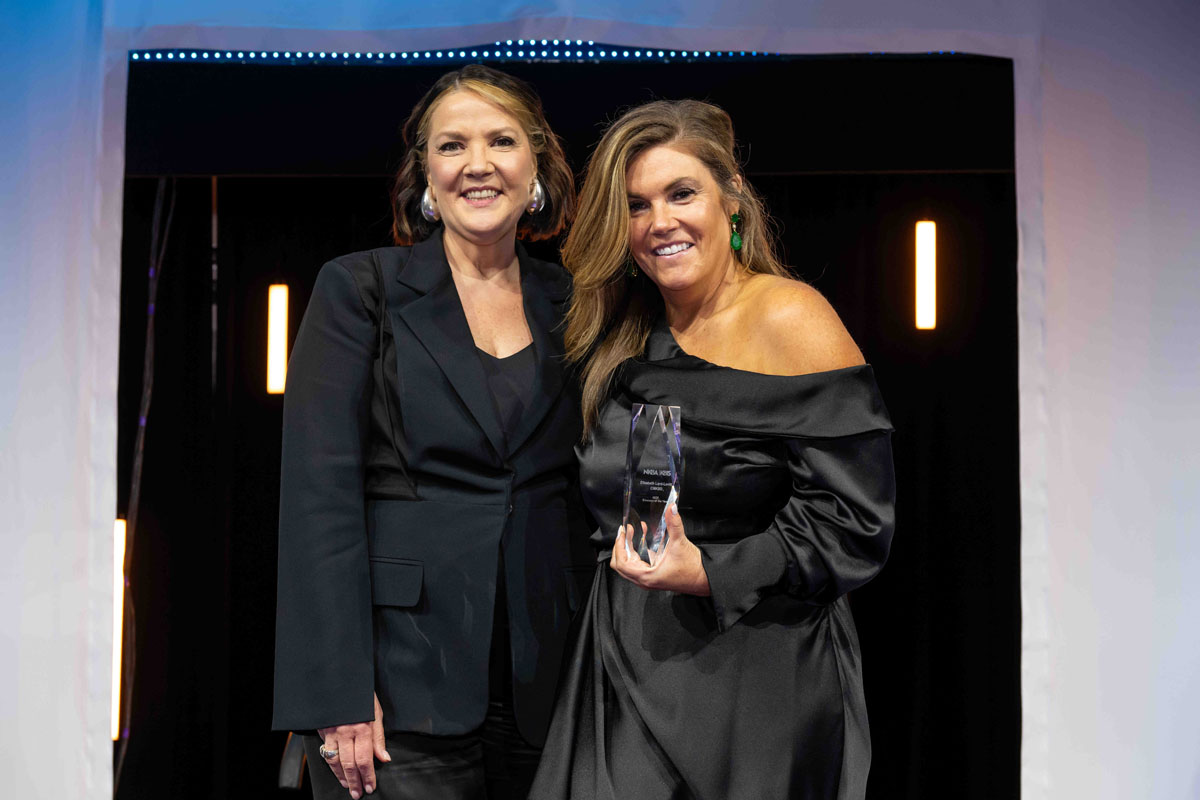










Leading interior designers alongside experts from Kichler and Lutron explored lighting as a foundational element of great design

Panelists: Jerel Lake, Lake Haus Design; Kim Scodro, Kim Scodro Interiors; Kristina Christopher, Chief Mktg Officer, Kichler Lighting; Becca Ryan, Senior Sales Manager, Lutron
Moderator: Kaitlin Petersen, Business of Home
Any designer who has ever tried to retrofit lighting to an existing space knows that great lighting is a foundational design element—not an afterthought. Lighting has a critical impact on how people experience spaces, and this panel focused on how designers can use lighting to elevate their projects.
When should we talk about lighting with clients? Immediately, agreed the panel, while noting that education is key—as clients are often surprised by the cost of quality lighting and may at first be resistant to investing in a lighting specialist. “It will cost more money, but it will save money in the end,” said Kim Scodoro, “Because you’ll avoid costly mistakes.”
Technology is a more recent consideration for those early client conversations. “Smart lighting has gone from being a gimmick to something people want—it’s expected,” noted Kristina Christopher.
Becca Ryan advises clients to consider how they want to experience their home throughout the entire day: “How do they want a space to feel at 7am versus noon versus after hours?”
Aside from ambient lighting, task lighting, and decorative spotlighting, lighting strategy can surprise and delight clients by anticipating their needs—through details such as lighting over kitchen countertops as well as inside closets and bars.
Color should always be planned in tandem with lighting, as clients can fall in love with a paint color without realizing the effect of light. On that note, layering light is key. “Always layer, always dim,” emphasized Kristina. “Never have just one source of light.”
And again, bring in your specialist. “The most important thing I’ve learned is to stay in your lane, “emphasized Kim. “You don’t know everything. Don’t try to wear too many hats.”