




Key Takeaways
- Kitchen + Bath projects are growing bigger, more involved;
- Bold use of color, materials and accents gain in popularity;
- Sustainability is often factor when recommending vendors/products;
- Baths take on spa-like attributes to heighten wellness experience;
- Technology increasingly important, but rarely integrated by an expert.
By Robert Isler
NKBA’s newly released 2023 Design Trends report revealed several new and upcoming trends as well as highlighted a number of others that continue to gain traction. The annual report, which surveyed over 600 members of the kitchen and bath industry, identifies the space, color, materials, products and technology trends that will dominate the kitchen and bath industry during the next two to three years.
The trend that only continues to gain ground is the expansion of both kitchen and bath spaces. Nearly 40 percent of designers said their kitchen projects are larger, more involved this year compared with 2021, while about one-third said the same for their bath projects.
Expanded Space for Storage/Functionality
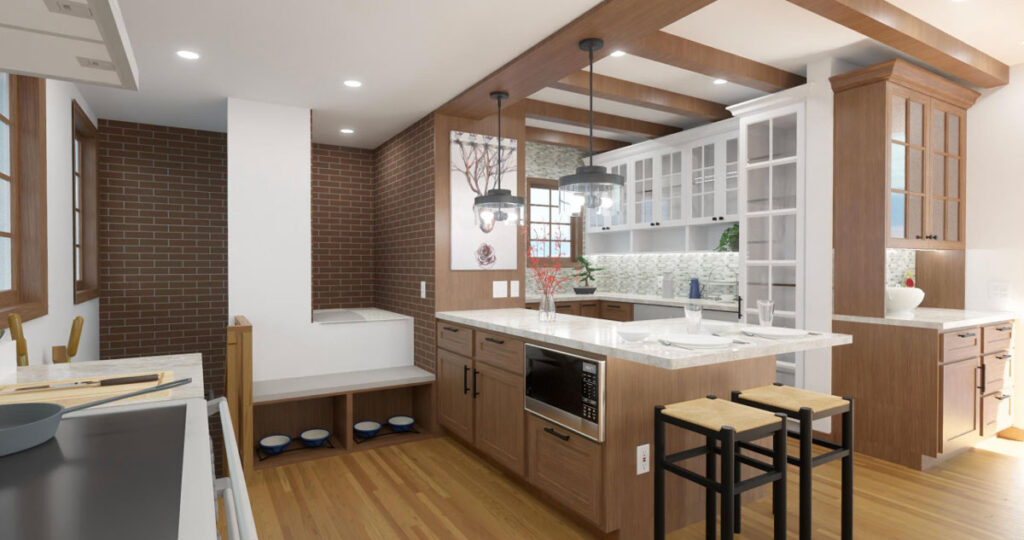
The majority of designers noted that to add additional storage and functionality, they are knocking down walls or taking over adjoining rooms to add more square footage. The increased space for kitchens enables designers to add walk-in or built-in pantries for expanded storage, larger (or two) islands and more appliances like a second dishwasher or column refrigerator and freezer.
Meanwhile, for baths the extended space allows larger showers for two or more people (at the expense of the tub), the addition of a closet, dressing room or sitting area. In addition, the expanded space is also giving rise to more aging in place features such as shower seats (79 percent), zero clearance (66 percent) and grab bars (65 percent).
Sustainability/Environment Matters
For both kitchen and baths, the trend towards sustainability and the environment will only grow stronger. The majority of designers for both kitchen and bath said they consider a manufacturer’s sustainability practices “at times” when making a product recommendation. The move toward embracing the environment also is seen by the continued movement toward opening up to the outdoors for both kitchens and baths. This means larger windows with fewer panes and glass doors that open to an outside patio, deck or garden.
Color Ways
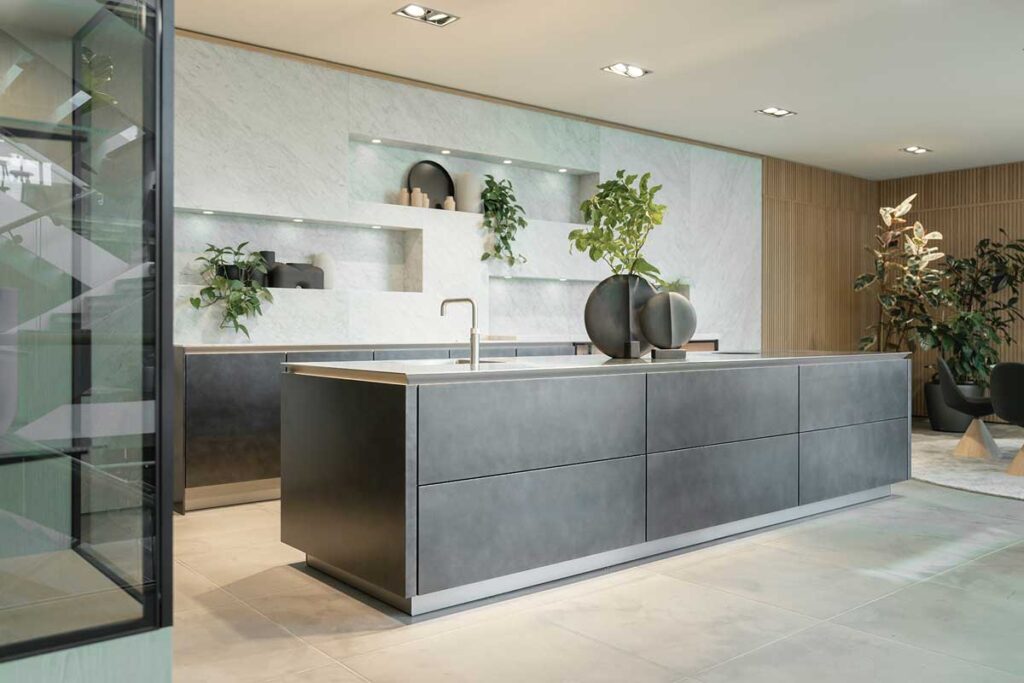
Color and bold accents are gaining ground in both the kitchen and bath continues. Specific to kitchens is the rise of darker, richer colors with green(45 percent) and blue (37 percent) topping the list. White/off-white remain the most popular neutral color. Meanwhile, brushed and matte finishes eclipse polished for fixtures and . “Warmer, natural colors, less gray and white,” said one designer in the survey. “Or [we’ll see] strong, dramatic colors mixed with light natural woods to warm it up.”
For baths, the spa-like design trend can be seen in the rise of using blues (42 percent) and greens (37 percent) to give a sense of calmness, serenity. To add drama and a hint of glamor, there’s also the addition of metallics with little to no shine, as matte or brushed finishes dominate.
Technology as a Functional Benefit
When it comes to technology, clients increasingly want it make their life easier, more efficient. In the kitchen, this translates to steam cooking/air frying features integrated into ovens and a mobile app to control appliances. In addition, designers said their clients are also excited about touchless faucets and voice- or motion-controlled lighting.
In the primary bath, respondents said their clients are looking for smart controls for heated floors, showers and lighting. They also want technology to help them conserve water and alert them to leaks/issues.
Even though technology is part of everyday life, the survey showed that only 31 percent of kitchen and 23 percent of bathroom projects include integrated technology. In addition, only 28 percent of designers said they work with a technology expert on their kitchen projects. For baths, only 23 percent said they frequently or sometimes use a technology expert.
Millennials on the Rise.
The survey showed that designers’ client pool continues to be mostly older, mainly Gen X and Boomers. However, there is a growing Millennial client base that is gaining momentum. In fact, 17 percent of respondents said they are designing more for this group than any other, nearly double what it was in 2020.