






Latest Insights From The Kitchen & Bath Pro Hub
Inside the NKBA Kitchen & Bath Pro Hub, industry professionals connect and actively share their insights from the ever-evolving world of design. This includes lively discussions about current design trends. Recently, the topic was universal design.
The data indicates universal design is no longer a compliance conversation—it is a luxury and lifestyle conversation that resonates across every generation. Here are the four key themes that emerged from the K&B Pro Hub discussions:
1. Universal design has reached a tipping point, evolving from a niche specialty into a foundational design standard across the industry.
Professionals consistently describe universal design as an expected part of the design process rather than an optional feature. Many report that universal design principles are incorporated into the majority of their projects, with some estimating that they influence over 50% of their work, while others indicate they are applied to nearly 100% of projects.
These responses suggest that universal design is becoming a standard practice, reflecting a broader industry shift toward creating spaces that are functional, inclusive, and adaptable for clients of all ages and abilities.
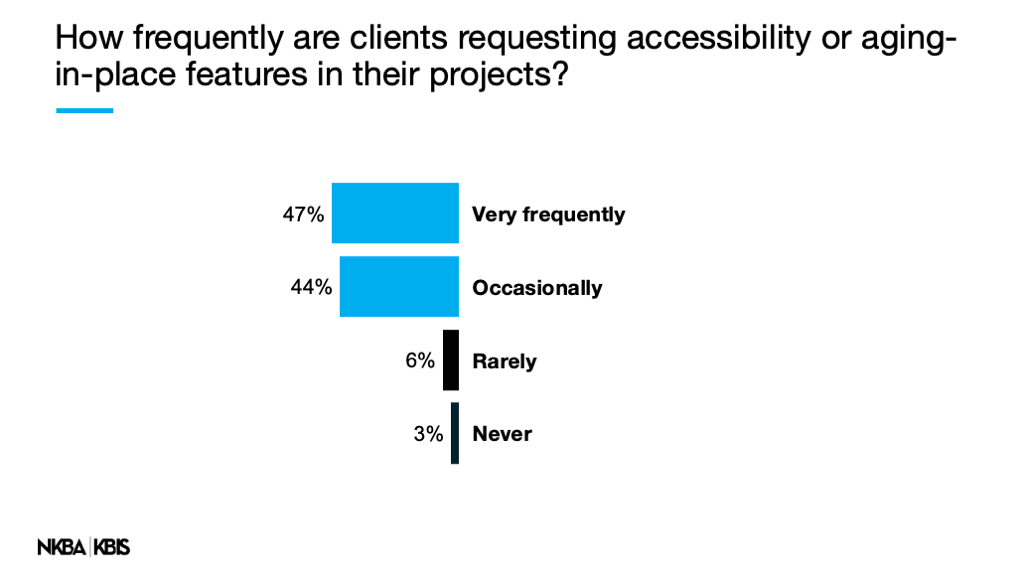
2. Aging in Place is the primary driver of demand for universal design, particularly in bathrooms, representing the greatest opportunity for product innovation and thoughtful design.
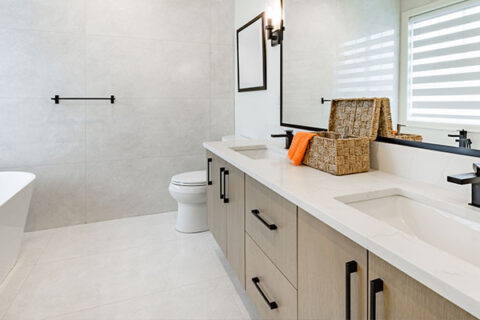
Professionals consistently report that clients are requesting Aging in Place solutions, making it the most common motivation cited across the research. Baths remain the focal point for these requests, with curbless showers emerging as the single most requested universal design feature.
Other frequently requested elements include barrier-free bathroom layouts, grab bar integration, seated shower benches, and comfort-height toilets, highlighting the importance of creating safe, accessible, and functional bathroom environments that support long-term independence.
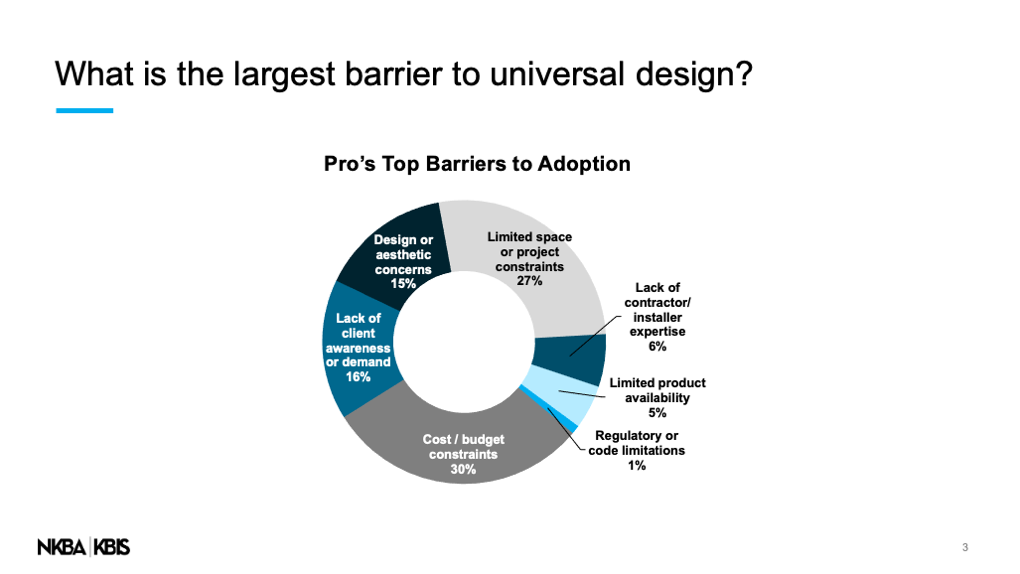
3. Budget concerns remain the greatest barrier to universal design adoption, but the larger challenge is demonstrating its long-term value rather than overcoming cost alone.
Professionals consistently identify budget as the primary obstacle when discussing universal design with clients. However, the research suggests that the barrier is often rooted in perception rather than actual cost.
Effectively communicating the long-term benefits—including improved safety, independence, functionality, and the ability to remain in the home longer—can help shift the conversation from expense to investment. While some clients already recognize universal design as a worthwhile investment, there is a significant opportunity to better articulate its value to a broader audience.
4. Universal design is increasingly being recognized as both an aesthetic and lifestyle enhancement, signaling an important shift toward broader mainstream adoption.
Professionals report growing recognition that universal design benefits people of all ages and abilities, rather than serving only those with accessibility needs. Clients are also becoming more receptive to the idea that accessible spaces can be beautiful, modern, and seamlessly integrated into high-quality design.
As awareness of stylish, accessible products continues to grow, universal design is increasingly being viewed as a lifestyle enhancement that improves comfort, convenience, and long-term livability. This shift presents a significant opportunity for the industry to reposition universal design as an aspirational design choice rather than a functional necessity.
Be part of the conversation!
Join the NKBA Kitchen & Bath Pro Hub here to connect with colleagues and experts, participate in groundbreaking research, and gain insights to elevate your business.