








NKBA On the Evolution of Luxury at the Annual ICFF in New York
Last month saw the final May installment of the International Contemporary Fair (ICFF) in Manhattan. Starting in 2027, the fair will take place in November.
Blair Loftspring, NKBA’s Director of Designer Relations & Brand Partnerships, has been attending the fair for the past 20 years. During this visit, Blair moderated a panel discussion entitled “Luxury, Rewritten: Four Principles Defining Exceptional Homes” featuring designers Sharon L. Sherman, CKD and Coco Kanakis.
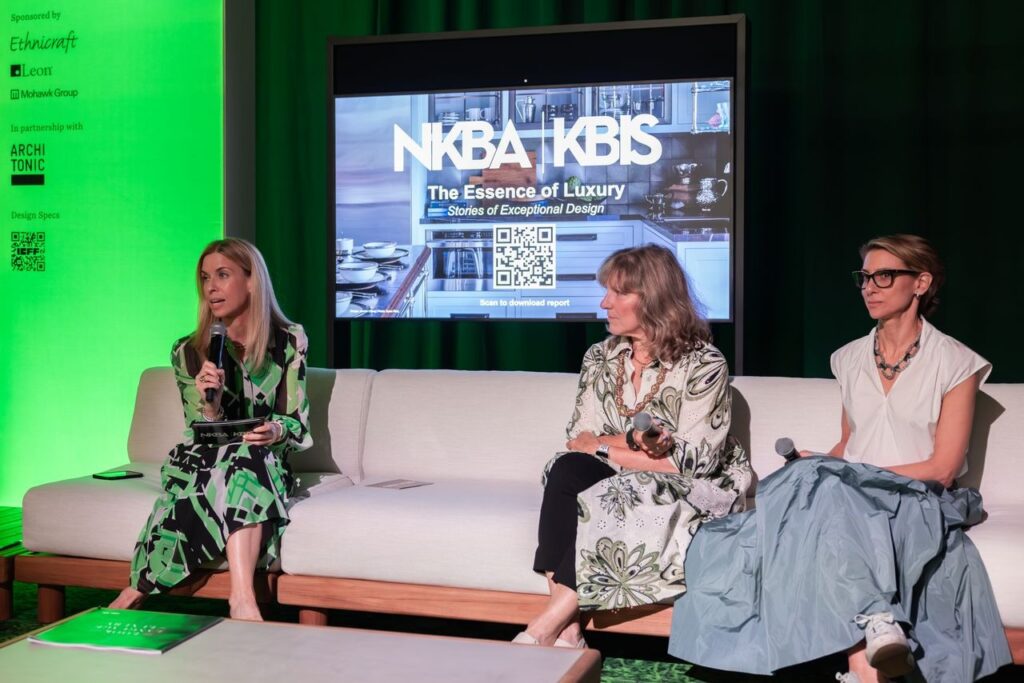
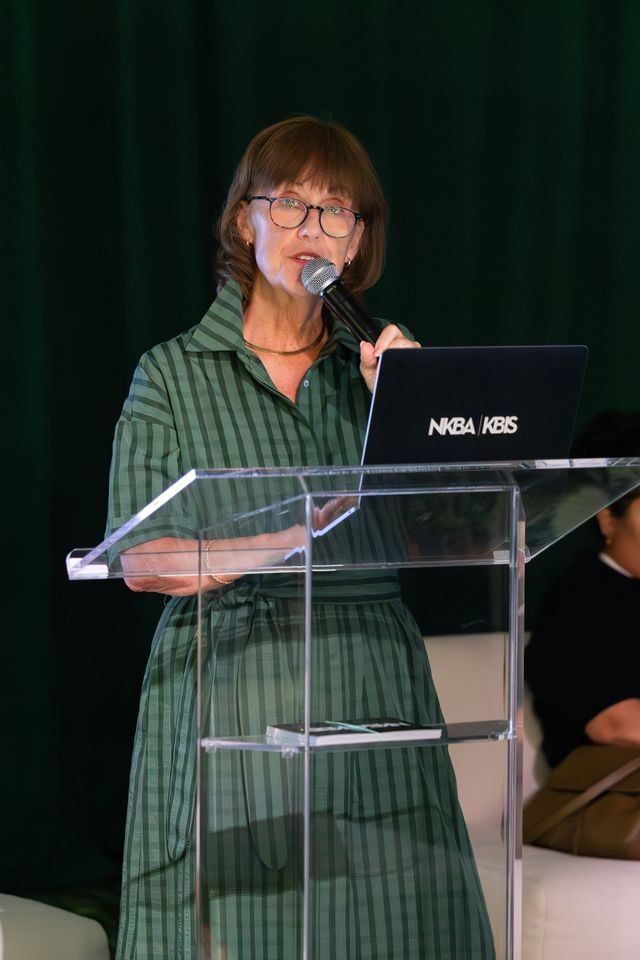
The panel followed a presentation on the evolution of luxury by Tricia Zach, NKBA’s Director of Research. Tricia shared insights from NKBA’s latest luxury research–a study that was based on in-depth conversations with 24 leading designers, spanning 21 remarkable projects.
“Luxury used to signal success,” said Tricia. “Today, it’s more personal and experiential. Clients are no longer asking ‘What does my dream home look like?’ but rather ‘How do I make this home work better?’”
Across all of the projects studied, four principles consistently emerged:
Personalization and storytelling
Luxury today is deeply personal. It tells a story about the homeowners–their experiences, their values, and what matters to them. That means a move away from one-size-fits-all luxury. Clients want spaces that feel collected over time, not perfectly staged. They’re also far more willing to take creative risks so that their space feels uniquely theirs. Rather than an isolated experience, luxury is now part of a broader lifestyle–shaped by travel, hospitality, and fashion. In short, generic luxury no longer resonates in the same way–and that changes the role of the designer. It becomes less about selecting products and more about editing, curating, and creating coherence.
Craftsmanship and bespoke detail
Obvious displays of wealth have taken a back seat. Now, luxury is defined by the quality of materials and the precision of the details. Clients are paying closer attention to how things are made, how materials age, and whether a space feels thoughtful rather than standardized. People are drawn to homes that feel deeply considered–where craftsmanship reflects care, precision, and originality. That means increased collaboration with artisans and makers to create work that feels distinctive and enduring. Designers need to understand that craftsmanship today operates on two levels–what you immediately see, and what you experience over time. Yes, luxury lives in visible details–but it also lives in functionality, durability, and ease of use.
Emotional resonance
In a world that often feels overstimulating and uncertain, the emotional role of the home has shifted. Clients are looking for homes that feel calming, restorative, and easy to live in–not overly formal or performative. Hospitality design has had a major influence here–especially in the emphasis on comfort, atmosphere, and emotional ease. Increasingly, design is engaging multiple senses at once: light, texture, acoustics, movement, and flow.
A deeper connection to nature and place
The luxury study revealed a strong desire for homes that feel in harmony with their environment. Natural materials, light, openness, and indoor-outdoor flow all contribute to that sense of authenticity. This shifts the role of design. Nature becomes a partner in the creative process, and regional identity shapes the outcome.
Finally, a word about technology: Homes are becoming more intelligent and more connected than ever before. At the same time, there’s a segment of homeowners who are intentionally choosing the opposite–designing spaces that allow them to disconnect.
Sometimes, the absence of technology can actually become part of the luxury. Often, the best technology is the kind you don’t see.
Images courtesy ICFF Jenna Bascom Photography