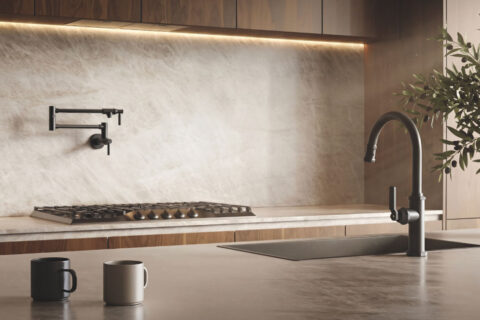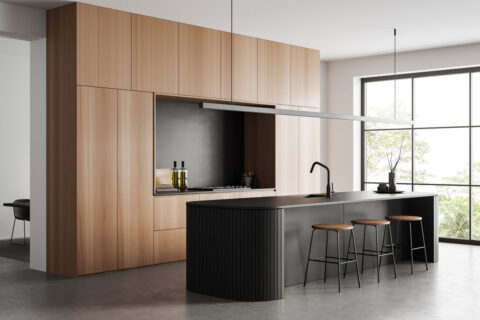









This conversation explored how materials, configuration, and smart workstation design turn the kitchen’s hardest-working zones into some of its most expressive.
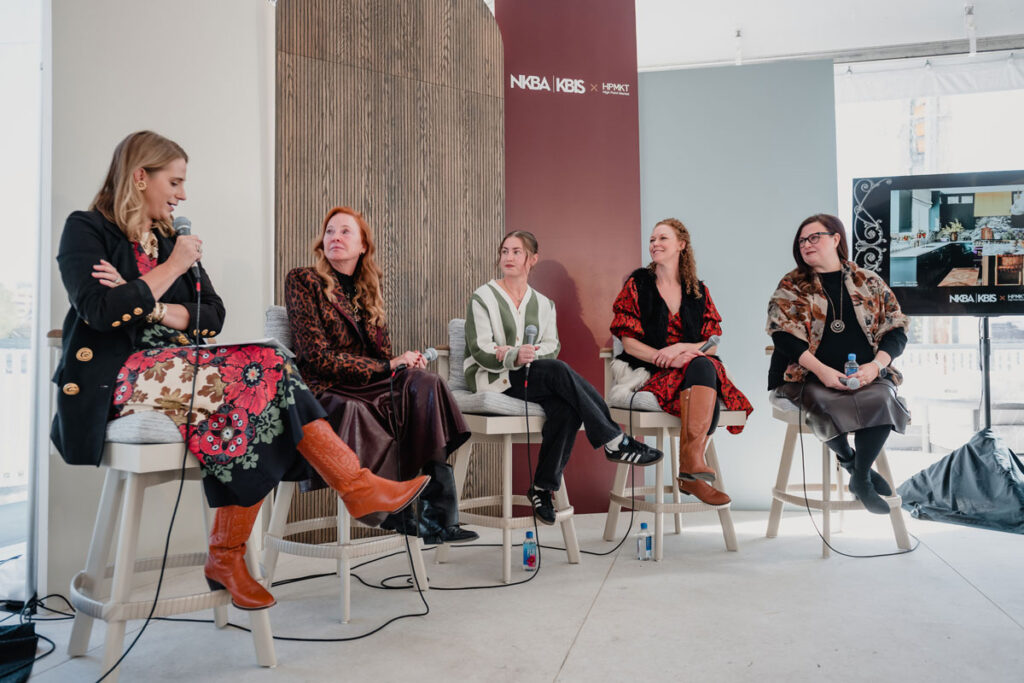
Jaque Bethke, Jaque Bethke Design
Rachel Burger, Studio 1950
Shae Wilder, BlueStar
Jeanne Dahlen, BLANCO North America
Moderator: Alison Kenworthy, Homeworthy
As ever, designing a kitchen that works hard and looks beautiful starts with figuring out who you’re designing for and what they like to cook.
“I think a lot of the conversation is about who is in the kitchen,” said Shae Wilder. “Is it a multi-generational family, empty nesters, do they only entertain during the holidays? Should they have a range top vs a double oven so they can reach it? Another question I ask is what is your favorite dish, because we want to make sure you can make that in your kitchen.”
Jeanne Dalen agreed. “From a product perspective, I ask how do you make it functional–really work for them and their families. And not just their families, but everyone who will experience the kitchen.”
The design process needs to consider the long-term plan and not just the immediate need. That means helping clients plan and educating them on design elements they’ll need in the future.
“Clients don’t know what they don’t know,” said Rachel Burger. “Sometimes you have to coach them out of what they’re used to.”
“Induction is a big one,” said Wilder. That might mean a compromise–such as including a gas burner or two.
Jaque Bethke, whose kids are adamant about the pitfalls of plastic water bottles, believes it’s important to understand the next generation and get clients into the future mindset as soon as possible.
What’s trending: water filtration, disappearance of microwaves, energy (what does induction cost vs gas and propane), less recycling because it’s being eliminated from the kitchen.
Burger emphasized the need to educate clients on what they’re looking at and why it costs so much money. “ My nightmare as a designer is for a client to say a recommendation I made didn’t work for them. Allowing them to make their own decisions for themselves and their family is so important.”